
A Talent For Giving
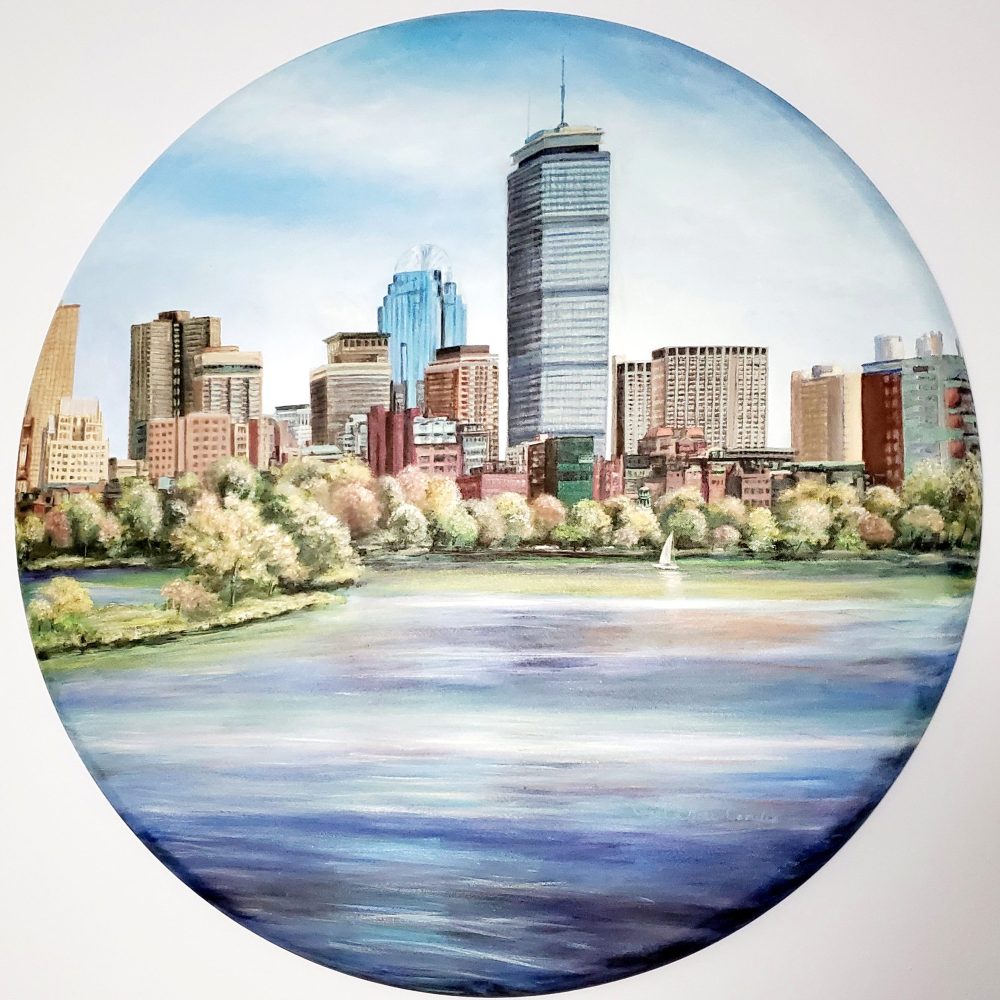

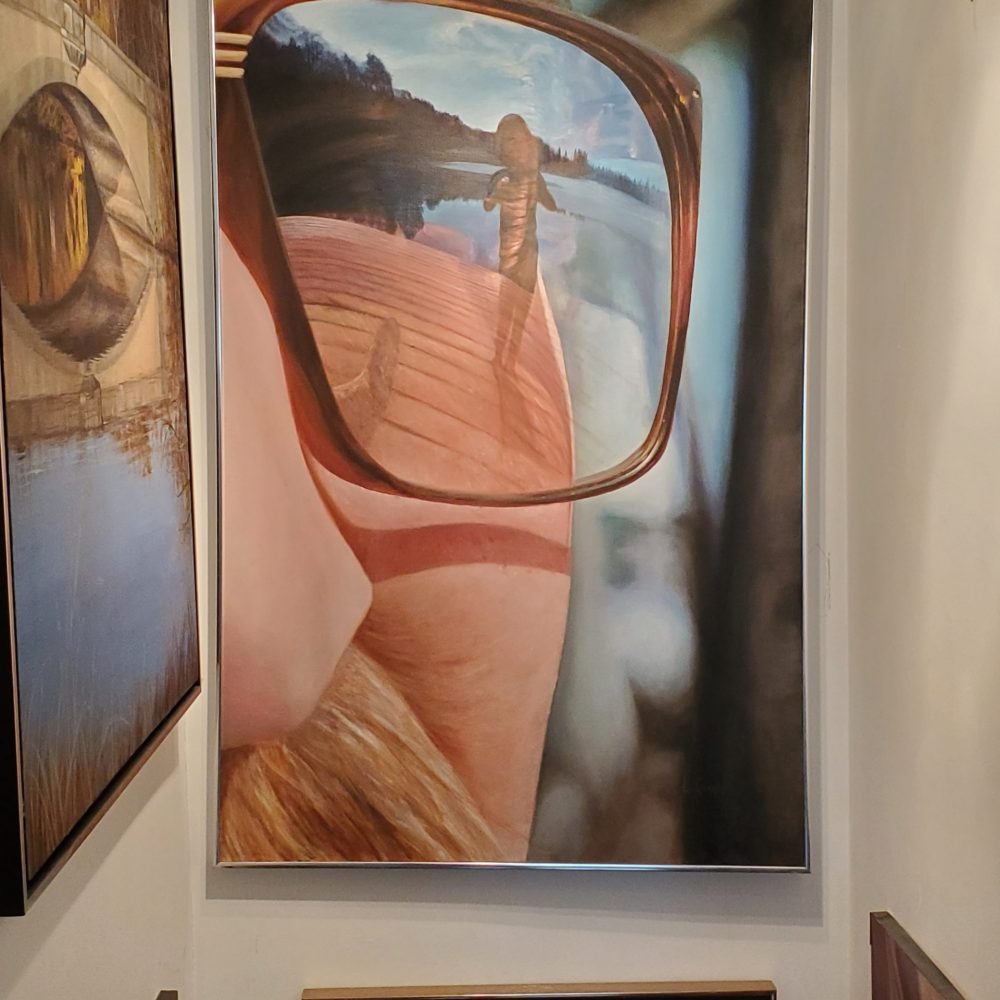


TThe annual Exhibit New England show held by Gloucester-based North Shore Arts Association (NSAA) is one of the most prestigious juried exhibitions in the region. “It was a real thrill to have my work accepted,” said Lexington artist Carol Rose Camelio, whose urban landscape painting “Across the Charles” was chosen for inclusion in this summer’s show (June 26-July 28, 2025).
Camelio’s work spans many genres: portraits, urban panoramas, still-lifes, landscapes and seascapes. Earlier in her long career, her paintings regularly won awards in juried shows throughout New England and the Northeast, appeared on magazine covers, and featured in galleries around Boston, including Francesca Anderson Fine Art Gallery in Lexington, and the Boston Design Center. Her art has been displayed in historic Boston venues, such as the Boston State House, Faneuil Hall, and Symphony Hall, and her work is in several private and corporate collections including the DeCordova Museum Corporate Collection, and the Warner Brothers Television Corporate Collection.
In a recent conversation in her Lexington home, Camelio said that her sons Alex, 43, and Kris, 35, had encouraged her to start exhibiting again, after years in which she has focused more on philanthropy rather than promoting her work in galleries and shows. At age 76, she’s still open to opportunities that might arise, but her priorities are clear: “Using my gifts to create art that works for the benefit of the community will always be my primary driving force,” she said.
The Art of Philanthropy
Camelio learned the art of philanthropy from her late father, Medford businessman George W. Rose, whom she remembers as “always doing charitable things.” In elementary school, she and her sisters – she is the third of nine siblings – made fans from construction paper, decorated in crayon with Monet-inspired water lilies and bridges, and sold them for five cents each to raise money for the Jimmy Fund, the Italian Children’s Home, and other charities supported by her father.
The lesson in using her talents for good stuck with Camelio. Over decades, she
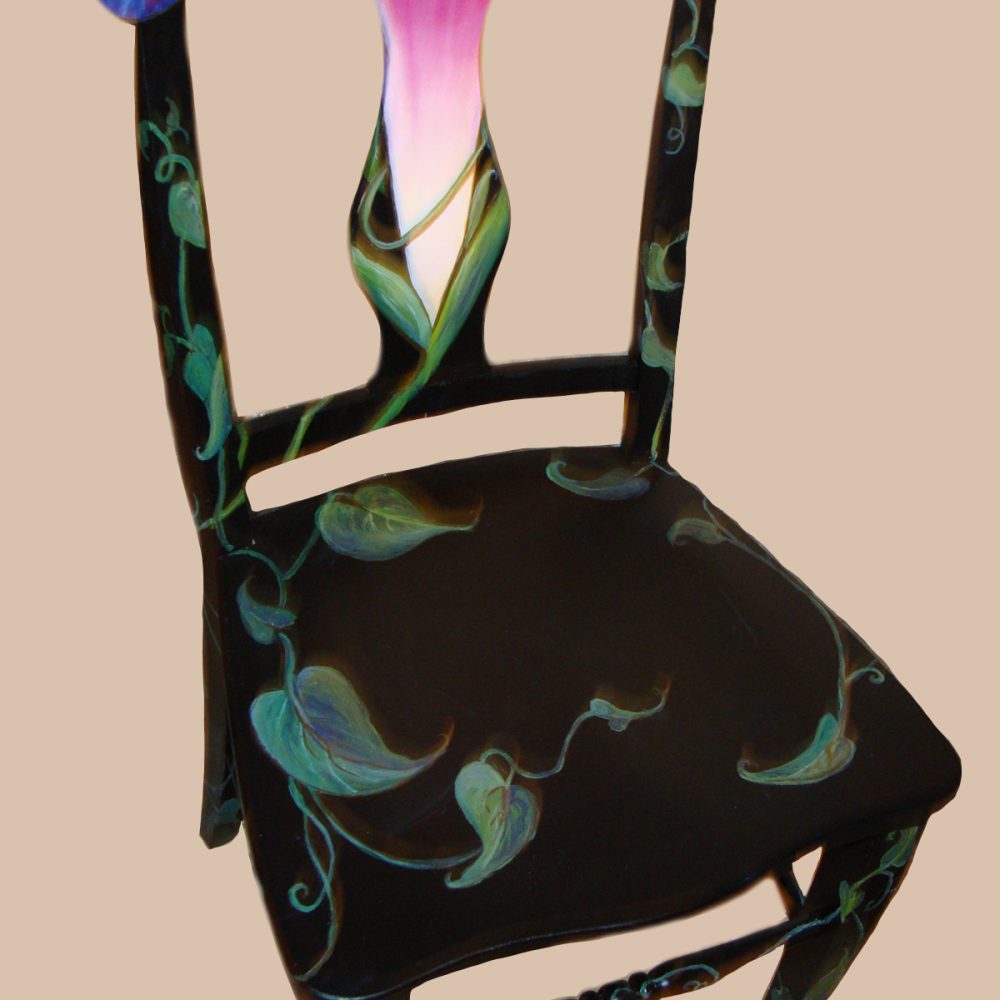
has supported charitable causes in Lexington and beyond with donations of thousands of dollars’ worth of work. One memorable piece was a painted chair, one of six given by local artists to benefit the Munroe Tavern Restoration Fund in 2011. Camelio’s design, “Glorious Morning,” adapted one of her favorite flower motifs – a morning glory – to decorate the seat and back of an eighteenth-century style chair.
“She was very generous – it was the most beautiful chair,” recalled Christina Gamota, who organized the fund-raiser. Well-known in town as a dedicated volunteer for non-profits including the Lexington Symphony Orchestra and the Garden Club, Gamota describes Camelio as “very upbeat and kind and generous – a wonderful person who understands life and always wants to help and give to others.”
Camelio’s generosity has benefitted many other local causes including Minuteman Homecare, Lexington Community Farm, and the Lexington Fitness Path. Further from home, she has given works to support the United Nations Association of Greater Boston and the New Hampshire-based Granite State Visiting Nurses’ Association. A particularly poignant project was a series of small tile-like paintings she made to raise money for the Sandy Hook Memorial in Newtown, Conn., one to commemorate each person murdered in the 2012 school shooting, the adult educators represented by roses, the first graders by rosebuds.
On an easel in Camelio’s basement studio stood a painting she had recently started work on, destined for the Spaghetti Dinner Fall fundraiser of The Women’s Lunch Place on Boston’s Newbury Street, a daytime shelter and advocacy center helping women experiencing homelessness and poverty.
Like all her work since she moved away from traditional oil paints in her college days, the piece is in her favorite medium: fast-drying, odorless water-soluble acrylic paint. “It’s going to be a sunset scene with water,” she said, noting that in her experience, serene ocean vistas and other watery views are popular at benefit auctions. (At the time of writing, she reported that the piece is finished, now titled “Waves.”) Her next charitable project will be a painting for the Spring 2026 fundraiser for WBUR, one of Boston’s two public radio stations, now facing the withdrawal of federal funding by the Trump administration.
Art All Around
Art is not confined to the studio in Camelio’s home, where she and her husband of 53 years Alexander Camelio, a retired educator, have lived since 1989. The mailbox is wreathed in painted wisteria – another of Camelio’s favorite plants – and the trompe l’oeil skills she honed working for Boston area interior designers in the early 2000s are also on view in the wisteria-covered bower and landscape she painted on the door and walls of a small bathroom.
In parallel with her work as an artist, for the last 12 years Camelio has worked for global IT company EPAM Systems, as Senior Manager for Solutions Consulting. The walls of her home office are hung with her portraits of family members, including a beloved younger brother who died suddenly, aged 27.
Camelio calls her husband Alexander her “biggest advocate.” For his study, she has created a series of soothing seascapes in his favorite blue and green hues, some clearly representational, others tending towards abstraction. Playing with “more abstract lines that are just fun and more free” is one new direction that she’s experimenting with, she said. She mentioned that she admires the work of American abstract expressionist painter Helen Frankenthaler, in addition to the two artists who have inspired and influenced her most profoundly, Claude Monet and Georgia O’Keeffe.
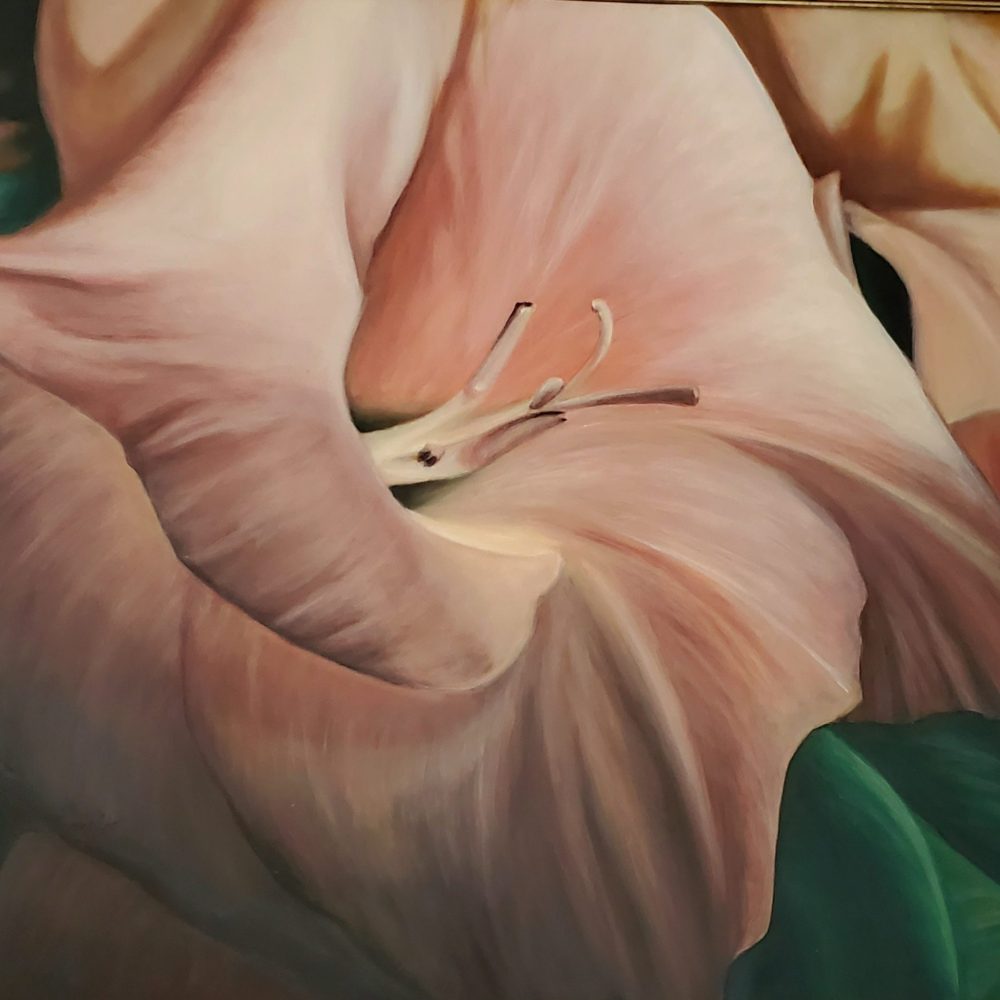
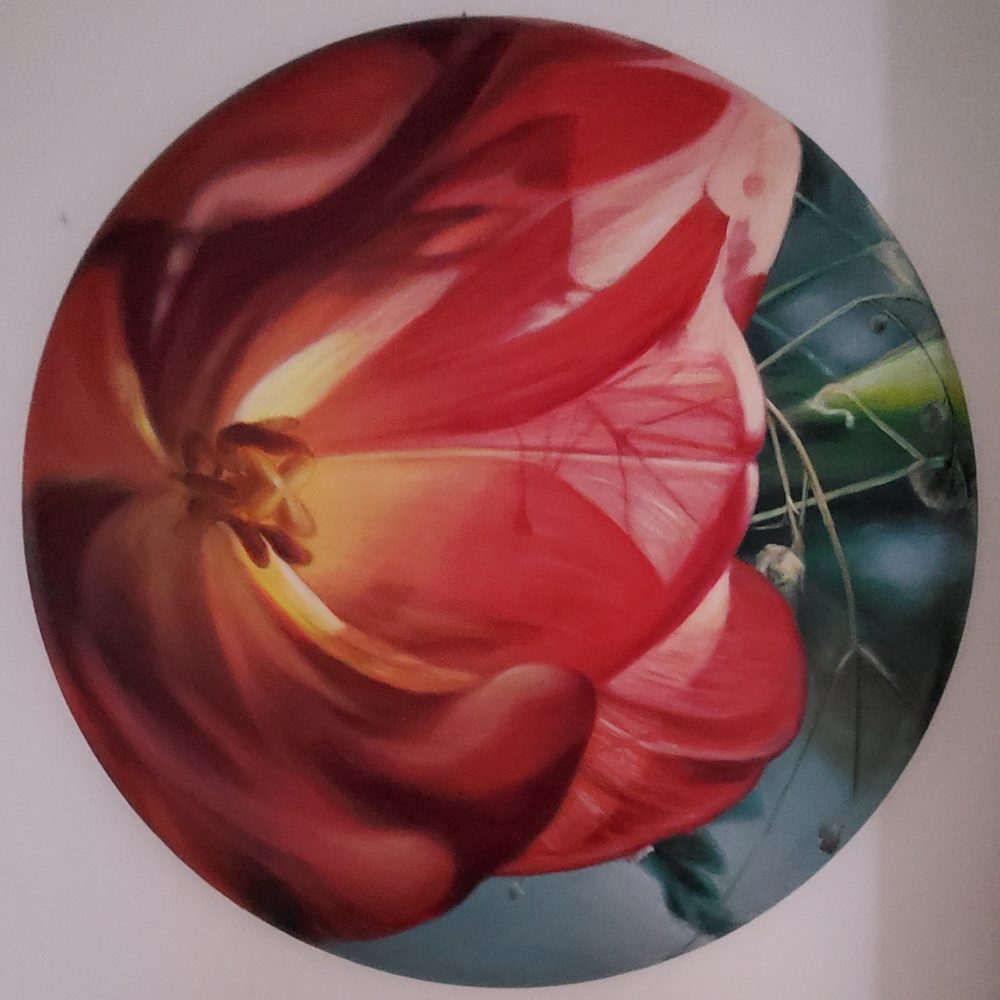
In other rooms Camelio pointed out a few pieces with special personal significance. “Gladiolus,” is a 30 x 48-inch canvas representing what she calls a “bees’- eye” close-up view of the interior of the furled peach-colored petals of a gladiolus flower. The painting was chosen as the representative image for the DeCordova Museum’s “Art That Means Business” show at the Federal Reserve Bank of Boston Gallery promoting its corporate collection in Fall 2000.
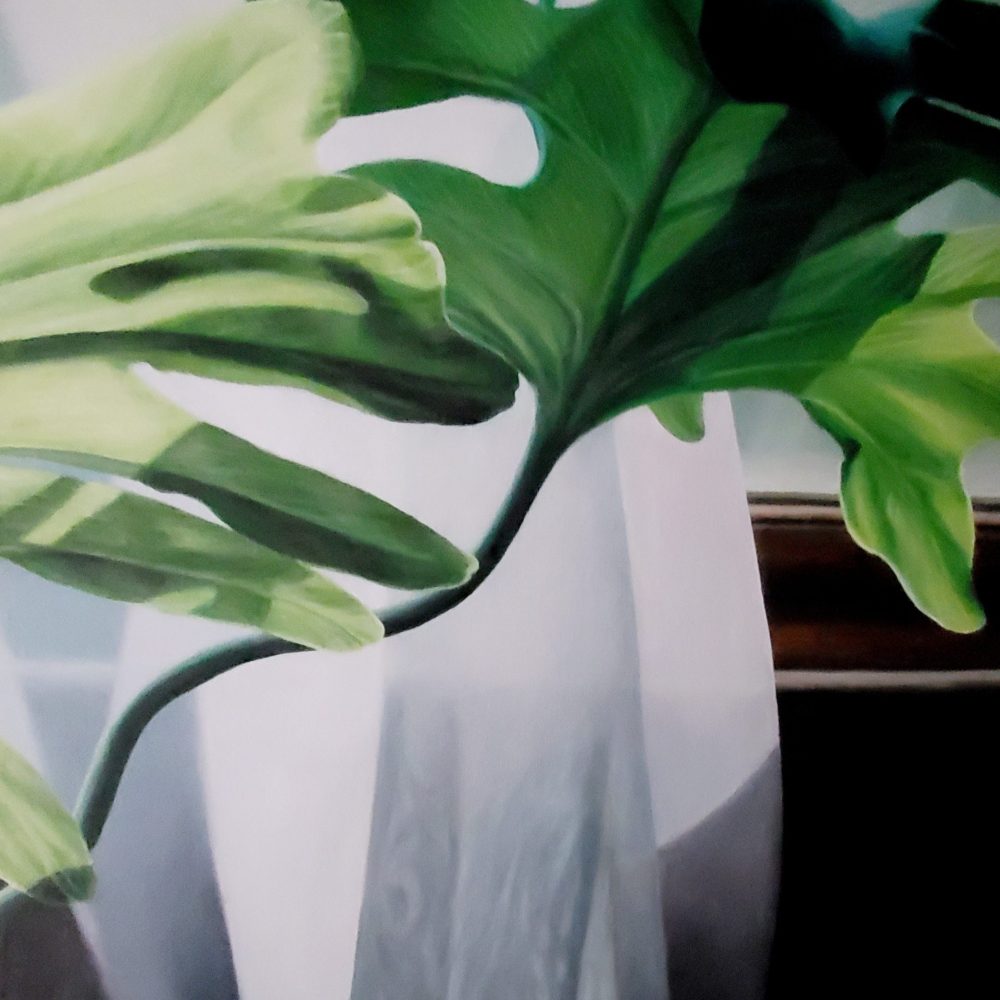
“By the Window,” a finely observed study of light falling on philodendron leaves by a window was the first of her paintings to be chosen for a national juried exhibition, at the Walter Vincent Smith Museum complex in Springfield, Mass. A small vertical image of a radiant pink waterlily and bud against darkly reflective water was selected for the 2018 Blanche Ames National Juried Art Exhibition held at the Ames mansion in North Easton, Mass., in Borderland State Park. This success was particularly sweet, said Camelio, given the caliber of the competition. “People who had great credentials, people from Newbury Street, were all trying to get in there,” she said.
While awards and public recognition are gratifying, Camelio finds her greatest satisfaction in the process of painting itself and her efforts to capture elusive “glimpses of beauty and moments that make one’s soul sing.” “That’s why I do this,” she said, “to feed my own spirit and hopefully bring a lightness to others who might share in that moment through my art.”
Adventures in Painting
Camelio’s early love of drawing and painting was encouraged both at school and at home. Soon after the family moved to Medford from Cambridge, when she was in first grade, her mother Mary Frances Rose allowed her to use up some leftover house paint. “’Do whatever you want with it,’ she said, so I painted pink and white stripes on our rumpus room down in the basement,” Camelio said, laughing.
While training to be a teacher at Boston State College, which merged with UMAss Boston in 1982, Camelio studied art as her minor. “My mother let me graduate to a mural behind her couch on the living room wall,” she said, and she also allowed her to park her easel on the dining room table and paint until four in the morning. “She was very, very supportive,” Camelio acknowledged.
After earning a BA in education, and certification as an art instructor, Camelio taught first grade and kindergarten in Medford for 12 years, while steadily gaining recognition as an artist. After her first son Alex was born in 1982, she gave up teaching to focus full time on art and motherhood.
“We used to do shows all around New England,” Camelio remembered, and on those long car trips, Alexander Camelio noticed their young son’s head lolling uncomfortably as he dozed in the back seat. He asked Camelio if she could make something to hold his head steady, and she devised a headrest that so impressed her entrepreneurial father that he insisted she take out a patent on it.
“She is so inventive!” said her husband, who brought out one of Camelio’s headrests to demonstrate the clever folding design, very similar to those now sold in airport stores worldwide. “You had to pay a fortune to keep the patent,” said Camelio, who gave it up after 17 years, when a lawyer advised her that pursuing imitators for infringement would eat up any profits she might make. “You have to let it go,” she said philosophically. “It worked for me – kept my kids’ heads from falling over!”
Camelio’s willingness to tackle projects that stretch her skills has led her to some intriguing adventures. In the early 1980s, through an artist friend with a connection to Warner Brothers, she was commissioned to produce a couple of child portraits pivotal to the plot of an episode in the ABC-TV series, “Spenser: For Hire,” based on Robert Parker’s character and filmed entirely in and around Boston. Faced with the task of completing two portraits in five days, Camelio put in 16-hour days, and was gratified when the camera zoomed in on one of her pictures “for 30 seconds” just before going to the commercial break.
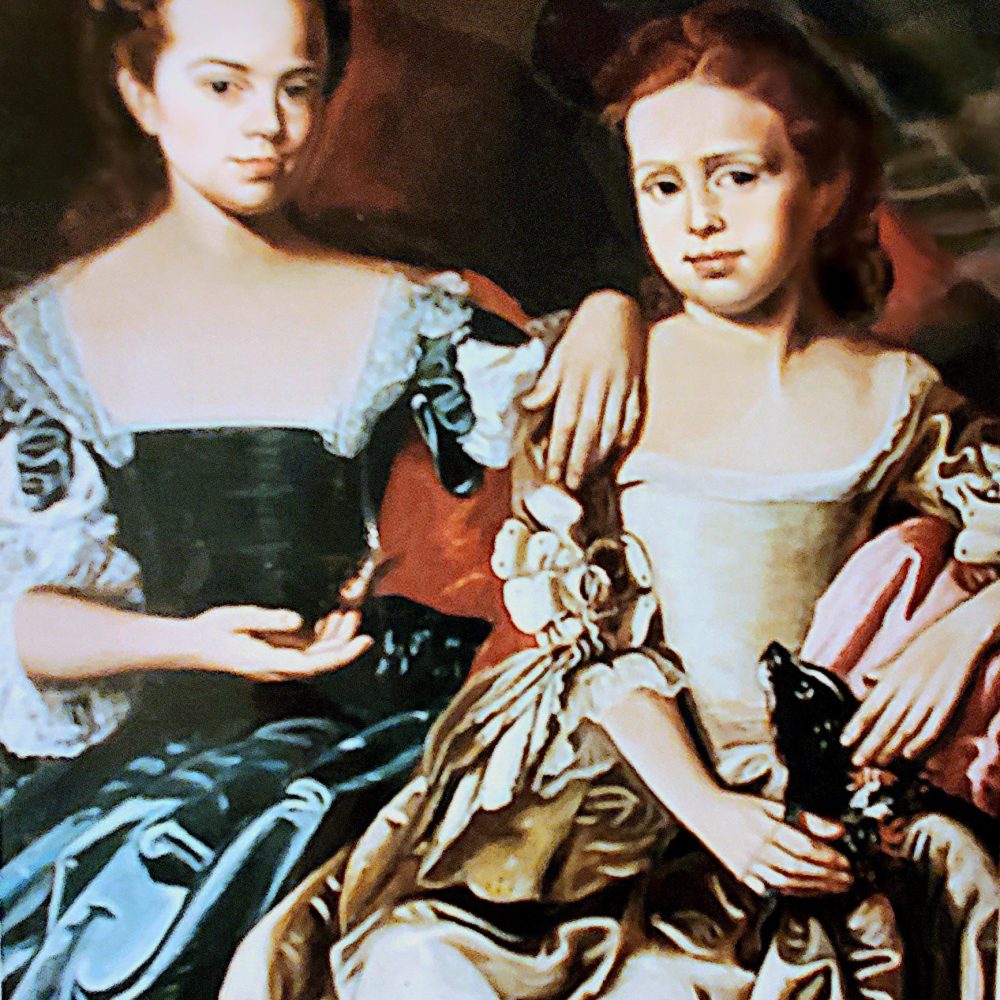
A very different commission took Camelio into the world of eighteenth-century society portraiture. A docent at the historic Royall House and Slave Quarters in Medford asked her if she could paint a replica of John Singleton Copley’s elegant double portrait of two young sisters, Mary and Elizabeth Royall, daughters of the mansion’s original owner, the merchant, politician, and slaveholder Isaac Royall Jr.
The Copley painting, from around 1758, is in the collection of the Museum of Fine Arts (MFA), Boston. Although the MFA occasionally loaned it to the Royall House for special events, the expense of insurance and security was prohibitive, and the Royall House Association wanted a good proxy to hang in one of the main public rooms.
With support from the Royall House Association, a grant she obtained from the Medford Arts Lottery Council, and permission from the MFA to study the original painting in storage, Camelio set to work. Working in acrylic rather than oils, Camelio knew she could not reproduce Copley’s work exactly, and she deliberately downsized her version and clearly described it as “after” Copley. “I never wanted to think that I was trying to do the exact same thing he did – I did it in my own way,” she said.
The biggest challenges, she recalled, were to reproduce the tiny hummingbird perched on one of the girls’ outstretched hands, and the sheen on the rich taffeta of their gowns. She told a local journalist at the time that the piece had taken her “hundreds” of painting hours. After its installation in 1987, her painting hung in the colonial mansion’s east parlor of the for decades. She recently learned that it has been replaced by a photographic copy, at original size, though her version remains in the permanent collection.
“I feel so blessed to have had these wonderful opportunities to do fun things,” said Camelio. She recalled advice she received from an older artist, when she was in her twenties. “She told me: ‘Just keep painting what you love. Don’t think about trying to do it for a living, but just paint and enjoy what you’re doing.’”
Decades later, Camelio plans to keep on following that advice. “I’ll never retire!” she said. “I always feel like as long as I still have some gifts to share with the world, I don’t want to waste them.”