
Munroe Center for the Arts Proposes Performance Pavilion
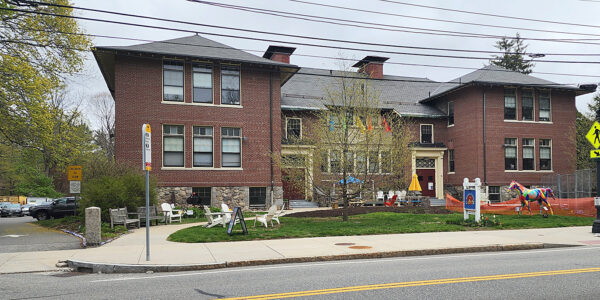
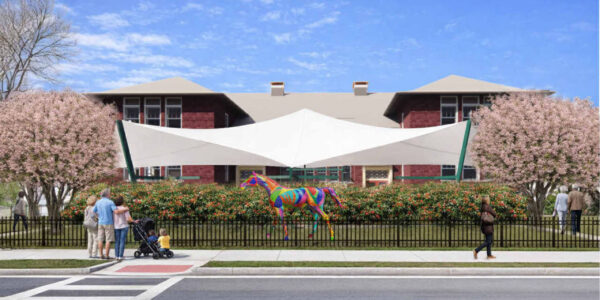
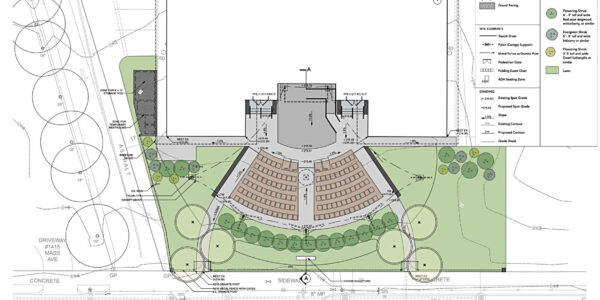
Lexington’s Munroe Center for the Arts proposes a seasonal outdoor performance space. Neighbors say the location is the problem.
L iving in a historic neighborhood is a blessing and a curse. There are protections that are both restrictive and comforting. Restrictions may keep a homeowner from building an addition, or add cost when replacing windows.
For business owners, the historic location, while central, may prove frustrating when they try to modernize and attract new customers or, in the case of the Munroe Center for the Arts (MCA), new members, audiences and performers.
MCA has recently proposed adding an outdoor performance space to its current campus and it has divided the neighborhood of this historic district. This tension between past and future is always delicate and difficult to navigate.
A Leap Without a Parachute: Trust is the Key
In that delicate tension, trust is essential. When change is on the table—as it must be at times — trust is what allows people to hold hands and jump together.
At the beginning of this process, however, many neighbors felt they were jumping without a parachute. They felt blindsided by the plans because they were not notified in advance.
Cristina Burwell, the center’s director, has apologized repeatedly for this “rough start,” explaining that it was never the Center’s intention to omit the neighbors. Actually, Munroe leaders thought the timing was great because it piggybacked on the current construction (HVAC and ADA compliance) already underway, and would cause less disruption.
Burwell acknowledges the misstep. “I hope you all know it was done with good intent,” she said. But good intent doesn’t always erase the feeling of being an afterthought in your own neighborhood.
For those who live on Massachusetts Avenue and the surrounding streets, the “intent” mattered less than the “impact.” To them, the lack of early outreach suggested that their input was an obstacle to be managed rather than a value to be integrated into a project that appeared out of left field.
The damage of this initial misstep is hard to overstate. Neighbors used expressions like “blindsided,” “done-deal,” “slippery slope,” and “elephant in the room” to discuss the project. At the outset of the Charrette, the stress was palpable. Aside from skepticism about the project’s funding (a single, unnamed donor), the real “elephant in the room” is the neighbors’ overwhelming sentiment: a total objection to the site.
“We are creating risks,” one resident said. “Safety risks, sound, light, inconvenience for neighbors.”
They simply do not think it is prudent to build a semi-permanent performance space in the front yard of this historic building, facing the street, in their historic neighborhood. Full stop.
The Design: Is this a “Sweet Spot”?
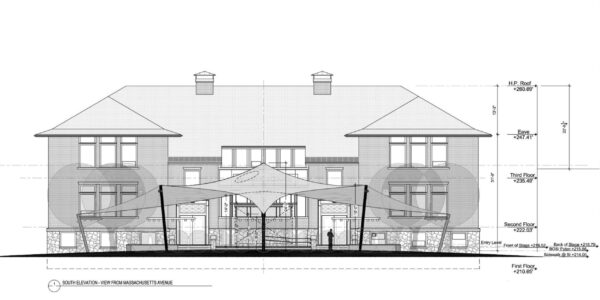
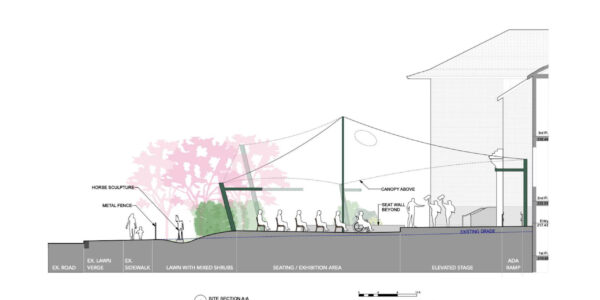
Architect and Munroe Board Member Bob Adams explained that the proposed space would exist at the front of the building, between the two “notches” on the facade. The design calls for a seasonal canopy “up in May and down in October” — reaching a peak of 24 feet. However, two supporting structures are permanent.
After receiving the neighbor’s heated emails, the team reduced the seating from 160 to 120. “One hundred sixty turned out to be really ambitious,” Adams said. “One hundred twenty gets us down to a sweet spot.”
The team imagines a space for dramatic readings, poetry slams, and a cappella groups—not rock concerts or presentations involving invasive amplification. “We’re not trying to recreate Great Woods,” the sound consultant John Cini said. “Think more of a coffeehouse or a jazz club.”
But as the presentation ended, the neighborhood’s overwhelming concern remained unanswered. One neighbor pointed out that for them, this isn’t a “sweet spot” — it’s a front-row seat to a life they didn’t sign up for. One neighbor is 90 feet from the proposed stage; another’s bedroom window faces the lawn. “What’s not on the list,” he said, “is whether this is the right location for this venue. And that’s probably the crux of the entire thing.”
Whose Front Yard Is It?
Is there a bit of NIMBYism going on here? Perhaps, but the issues are well beyond.
During the initial neighborhood email campaign, there was a constant undercurrent of support for the Munroe Center. Programming for the arts and for children was never an issue. The neighbors have always accepted the presence of a summer stage because it was used infrequently and was makeshift. Neighbors overlooked the increased demands for parking or obtrusive lighting on “performance” occasions. However, formalizing this arrangement—without first asking the neighbors—felt like a breach of the unwritten rules of neighborliness.
The “Yes In My Backyard” (YIMBY) movement which has been popularized by the book Abundance is changing the conversation these days, promoting openness to new ideas for living, working, and transportation. But what happens when the “backyard” in question is actually the front yard?
How can trust be rebuilt when neighbors feel their opinions are not being considered? They have many questions: Will this be a performance space for rent? Is Munroe considering it a revenue vehicle?
Can the neighbors trust that it will not become a “slippery slope” once the steel is in the ground? What about safety, noise, and parking?
A Room Full of Polite Skepticism
As the Charrette commenced, Daphne Politis of Community Circle, stated, “This project, as with any thoughtful design process, has evolved through iteration.” But for many neighbors, the word “iteration” felt like a polite way of saying “troubleshooting a flawed premise.”
“We’re not hearing each other’s concerns,” one resident said. Another called the approach “divide and conquer,” arguing that dispersing people into small groups prevented a full, collective conversation about the only question that mattered: Should this be in the front yard at all?
The meeting’s structure itself became a flash point. The facilitator encouraged attendees to visit breakout stations — one for sound, one for traffic, one for landscaping — each staffed by a subject‑matter expert. The intention was to gather detailed, written feedback. But for many in the room, the format felt like a detour around the central issue.
The facilitator emphasized process, but neighbors felt the process was being used to avoid the foundational question.
As the facilitator introduced the project team, the room settled into a collective posture of polite skepticism.
They would listen, but they were also waiting to see if their voices would finally carry the same weight as the “now-revised” blueprints.
Escaping the “Hidden Gem” Trap
To understand how the Munroe Center arrived at this moment, you have to understand its history and aspirations.
“When I started here 10 years ago,” Executive Director Christina Burwell told the room, “one of the things I heard on a number of occasions was that Munroe was a hidden gem. It was a hidden treasure. And to me, that sounded elitist. I would like us to be a little bit more welcoming.”
The building itself has lived many lives—from a 1905 school to a creative hub. Last year, construction forced summer camp performances onto the front lawn. “What that led to was some really wonderful experience,” Burwell said. “People commented on how vibrant it was, how much life there was.”
The idea of a formal outdoor stage began to take shape, aligning with the town’s LexNEXT plan for more cultural spaces.
Indeed, Lexington struggles to accommodate its many organizations’ needs for affordable gathering spaces. The recent loss of the Depot Building has exacerbated the situation. Space for young people to gather outside of school has been consistently foreclosed over the years; the town hasn’t had a dedicated drop-in space for teens since the 80s. The Community Center is really the Senior Center.
Daphne Politis, the moderator, also noted that there is currently a “loneliness epidemic” in the country. From seniors living alone to kids holed up in bedrooms with their phones and computers, the crisis is real. “And it has been tied to that lack of third places,” she explained.
Prescient sociologist and scholar Ray Oldenburg defined the “first place” as the home, the “second space” as work, and “third spaces” as the cafes and parks where communities knit themselves together.
The Munroe team believes the summer stage could be one of these Third Places in Lexington. Cary Library currently successfully serves as a Third Space, but the need is much greater.
Safety: The Most Visceral Concern
If there was one theme that rose above all others, it was safety — not in the abstract, but in the deeply personal way only longtime residents can articulate. Several described the unspoken rule that has governed their neighborhood for decades: no playing in the front yard. Cars can jump the curb, they said, sometimes landing on the sidewalk with enough force to rattle windows.
One resident recalled watching a vehicle lose control and skid directly into the area where the proposed audience would sit. Another described the panic of seeing a child break free near the street — a moment every parent knows too well.
We all know that several unfortunate pedestrian accidents have occurred on Mass. Ave in the past.
The idea of willfully adding children, crowds, and evening events to that environment feels, to many, like tempting fate. “One tragedy is one too many,” one neighbor said. The concern was repeated with a kind of urgency that made clear: for these residents, safety wasn’t a bullet point on a feedback board. It was the emotional core of their objection to the site.
On-street parking on this busy thoroughfare is constantly interrupted by driveway entrances. This configuration makes parking difficult to navigate for residents and visitors alike, adding a layer of logistical stress to any gathering.
Munroe has hired a transportation expert to study traffic and parking. Jeff Maxtutis is a Vice President at BETA. He has 40 years of experience in transportation planning. He has worked on small neighborhood projects and large-scale multi-modal projects.
Maxtutis didn’t get much of a chance to outline what he has done so far, but he did receive lots of information from attendees about traffic and parking in the neighborhood. The experts proposed ways to mitigate danger and to facilitate neighbors’ freedom to enter and exit their driveways. But neighbors wondered—why tempt fate?
Noise concerns were equally visceral. For a neighbor living a breath away, the promise of “occasional” events felt empty. “This would be my lived every day… unavoidable for me.” People expressed concern about having people over to enjoy a BBQ and not being able to hear conversation over a performance.
John Cini announced that they will hold a sound simulation in May after the trees become leafy and it will be open to the public.
The Geography of Compromise
If not here, then where? Residents suggested some alternative sites: the back of the Munroe Center itself, the Community Center, or Antony Park, located at Tower Park and featuring a small amphitheater with electricity.
Cristina Burwell responded candidly: “My organization is small. I cannot manage a canopy and a performance space that is not close to Munroe.” This is the heart of the dilemma: Munroe wants to expand its mission, but only within its own footprint.
Neighbors love cultural opportunities and arts programming, but not at the expense of their peace and safety.
The meeting wasn’t just a venting session; it was a first attempt to find common ground. There were stations staffed with subject-matter experts to answer questions, record objections, and provide ideas.
Could there be blackout dates? Could events end early? Might there be a shared calendar? But for many, these ideas felt like negotiating with an unclear goal. Neighbors want a decision on the location before entertaining details.
Historic Character and the Question of Fit
Beyond safety and process, several neighbors raised concerns about the historic character of the district. The Munroe building, designed in the early 1900s as part of a townwide school‑building initiative, is a defining architectural anchor of the neighborhood.
To some, the proposed 24‑foot seasonal canopy — supported by five steel pylons that would remain visible year‑round — felt incompatible with the building’s modest, early‑20th‑century lines.
Residents questioned whether the structure would meet the Historic Districts Commission standards. They are charged with preserving the area’s visual and historic integrity standards.
The issue wasn’t simply aesthetic; it was also philosophical. Could a tensile, contemporary performance structure coexist with a streetscape prized for its continuity and restraint?
Or would it introduce a visual rupture?
This is an aesthetic and highly subjective consideration.
Coming Together and Getting to Yes
For Munroe, the stage is a chance to be visible—a way to create a cultural commons. They were genuinely excited by the response to their temporary front-yard stage and want to build on that potential. They want to restart their very popular Monroe Saturday Nights and provide more performance space in a town that lacks smaller and more intimate theater and performance venues.
For neighbors, it is a symbol of the creeping sense that their quiet corner of Lexington is changing in ways they can’t control, and that their early attempts to raise a red flag had been ignored.
In the end, the debate is about more than a canopy or a set of steel pylons. It’s about what it means to live in community—balancing quiet with culture, and preservation with possibility. It is about a town rooting for both sides: for an essential arts center to flourish and for neighbors to maintain their sanctuary.
One of the most striking aspects of the meeting was the nuance in the neighbors’ position. They were not opposed to the Munroe Center. They were not opposed to the arts. They were not opposed to summer camp performances, which have long been part of the neighborhood’s seasonal rhythm.
What they object to is the formalization of a performance venue — with lighting, sound, seating, and a semi‑permanent footprint — in a location they feel is fundamentally unsafe and incompatible with residential life.
In short, they supported the mission, but not the location. Despite disagreements, this presents opportunities to move forward with negotiations.
The Munroe team left with pages of feedback and a renewed understanding of the depth of neighborhood concern. The path forward will require more than design revisions; it will require a shared willingness to confront the hardest questions head‑on.
This process shows that Lexington values its creative spirit as much as its residential peace. The path forward requires shared empathy — an ability for Munroe to see through the eyes of a neighbor and homeowner and for neighbors to recognize a “third space” could help enhance the town’s social fabric and be a meaningful contribution to the town’s arts community.
According to Cristina Burwell, “The Summer Stage conversation was a great opportunity to directly share our ideas and hear feedback from the community.
“Our task now is to review all that we heard to create an accessible, sustainable, and intimate space for performers, campers, and the community.
The meeting facilitator is collecting all the feedback from the event – both from the in-person exchange, and through the online feedback form. Our next step will be compiling a community report that will be available later this spring. Our Summer Stage web page is the best place to look for ongoing information and ways to connect.”
One resident said, “Keep working for a workable solution.” As always, Lexington is finding its way, and it is doing so by learning to listen.”